Make your own audiobook+Make your own audiobook
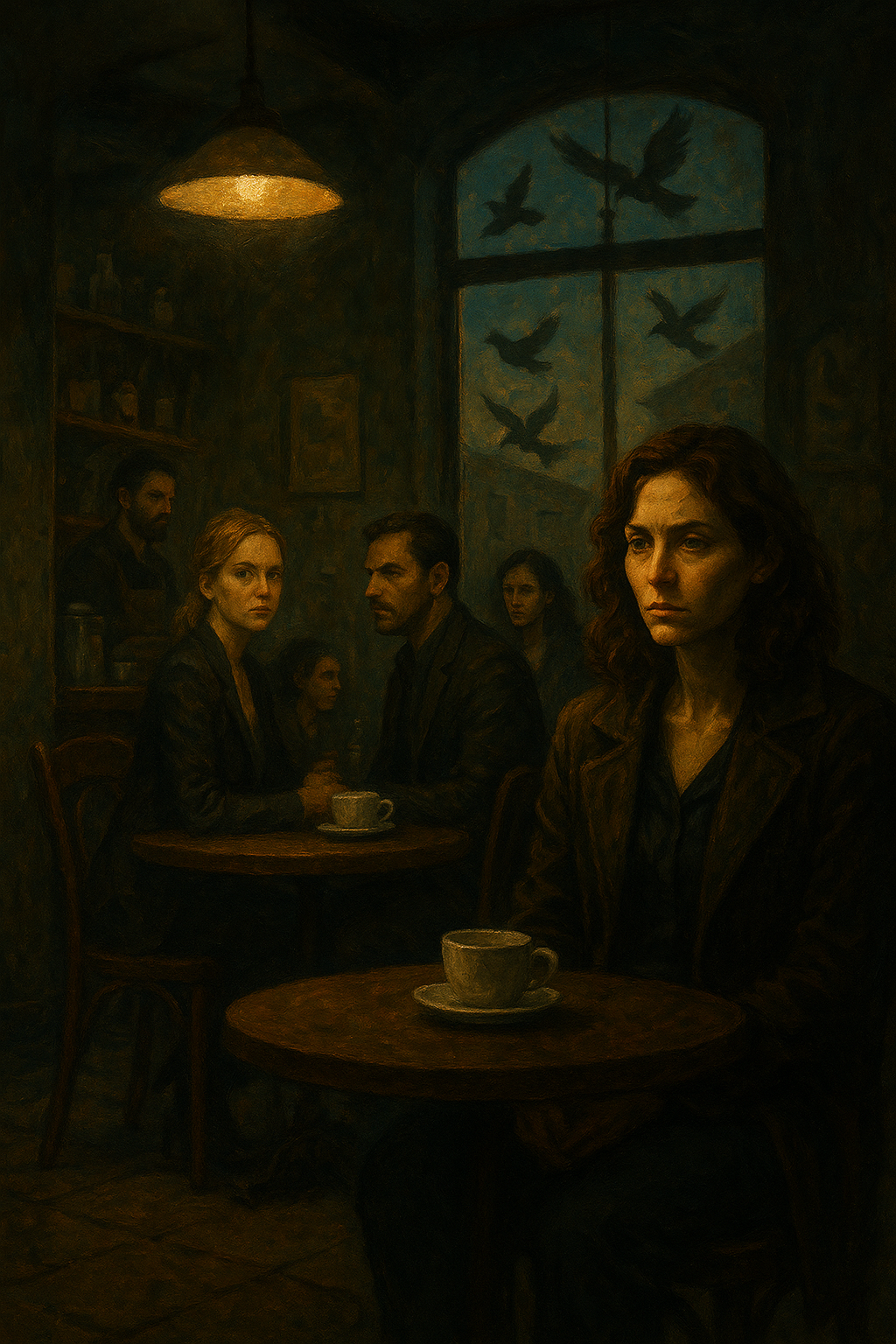
Poster for Feathers of Betrayal

Feathers of Betrayal

From Revenge Ink(c)

When a disillusioned former activist, Mara, discovers her estranged sister is now a high-level target at Revenge Ink(c), she must navigate the company’s web of vengeance to decide whether to reclaim their fractured bond or enact her own revenge for past betrayals. As she uncovers secrets buried deep within the layers of the company and her own heart, Mara faces the chilling reality that some debts are best left unpaid.

Graphene
Written. Spoken. Yours.
Graphene
Written. Spoken. Yours.
←

Feathers of Betrayal

🥽 VR
6 chapters · ~39 min read

novella

When a disillusioned former activist, Mara, discovers her estranged sister is now a high-level target at Revenge Ink(c), she must navigate the company’s web of vengeance to decide whether to reclaim their fractured bond or enact her own revenge for past betrayals. As she uncovers secrets buried deep within the layers of the company and her own heart, Mara faces the chilling reality that some debts are best left unpaid.

A dimly lit, eclectic café called 'The Pigeon Nest' in an old warehouse district, late evening with the faint sound of fluttering wings outside, mixing with the aroma of brewed coffee and spilled secrets.

Made with EmberKiln
Chapter 1 · ~6 min read

Whispers in the Nest

9:49

The coffee had gone cold an hour ago. Mara held the cup anyway, the ceramic ring dark against the wood grain of the table. Not because she needed it. Habit. The kind of habit that came from years of meetings in spaces that weren't quite safe. The Pigeon Nest occupied the ground floor of a converted warehouse, all exposed brick and salvaged windows that rattled when the wind moved through the district. The tables were mismatched, inherited from somewhere else, and the owner—a woman named Rita who asked no questions—kept the lights dim enough that you could exist here without being seen. Mara had learned not to stare. Instead, she existed in the margins of her own attention, the way you listen to a conversation in the next room without turning your head.

•••

Three men sat near the window. They'd been there since seven, when the light had started to fail outside. She knew their order without watching: whiskey for the tall one, coffee black for the older man with the scarred hand, beer for the third. They were careful with their voices. Not secretive exactly. Just practiced. The tall one leaned forward. "Structure's compromised." The older man didn't move. His coffee sat untouched on the table. "How much?" "Enough. Someone's asking the wrong questions." The wind moved through the café then—a draft from the back door, or the windows settling. The older man's hand tightened on his cup. He had scars across his knuckles, the kind you got from a long time doing something specific. His voice was measured, each word separated by a small silence. "That's what I'm trying to figure out."

•••

Mara's coffee was definitely cold now. She could feel that. The temperature of it against her palm, inert and wrong. She didn't set it down. Movement would break the thing that was happening, the thin membrane between listening and being noticed. The tall one glanced toward the window. Outside, pigeons had gathered on the fire escape, their bodies tensed as if braced for flight. One of them shifted its weight, and the metal groaned. The man watching them seemed to be waiting for something. Or waiting for something to be over. The distinction was probably not meaningful. "There's a name," the tall one said. The older man's jaw moved slightly. He was chewing the inside of his cheek, a tell so small it would have meant nothing to anyone who didn't know what to look for. Mara knew what to look for. "What name?" the third man asked.

•••

The tall one didn't answer immediately. He reached for his glass, and the ice shifted inside it. The sound was small and precise. It cut through the café's ambient hum—the hiss of the espresso machine, Rita moving behind the counter, the low murmur of other conversations that weren't this one. "Mara," he said finally. The coffee cup remained in her hand. Her fingers didn't loosen. Around her, the café continued as if nothing had changed. A couple laughed at a table near the bar. Someone's phone buzzed. Rita was wiping down the espresso nozzle with a cloth. The world had not shifted. The world had simply revealed itself to have already shifted, and Mara was only now catching up to the fact.

•••
“

Like something being said in the space where she wasn't supposed to be listening.

The tall one was still watching the window. The pigeons had begun to move, their wings catching the streetlight from outside. One of them fluttered against the glass as if testing it, as if checking whether the boundary between inside and outside was still there. She didn't move. Not yet. Not while they were still talking. Not while the older man was leaning back in his chair, his scarred hand finally reaching for his coffee, and the tall one was watching the birds the way a person watches a message they can't quite read. Outside, the pigeon beat its wings against the window again. Its heart sounding like whispers. Like something being said in the space where she wasn't supposed to be listening. Like something being said about her.

•••

{ "prose": "The coffee had gone cold an hour ago. Mara held the cup anyway, the ceramic ring dark against the wood grain of the table. Habit. The kind of habit that came from years of meetings in spaces that weren't quite safe.\n\nThe Pigeon Nest occupied the ground floor of a converted warehouse, all exposed brick and salvaged windows that rattled when the wind moved through the district. The tables were mismatched, inherited from somewhere else, and the owner—a woman named Rita who asked no questions—kept the lights dim enough that you could exist here without being seen. Mara had learned not to stare. Instead, she existed in the margins of her own attention, the way you listen to a conversation in the next room without turning your head.\n\nThree men sat near the window. They'd been there since seven, when the light had started to fail outside.

•••

She knew their order without watching: whiskey for the tall one, coffee black for the older man with the scarred hand, beer for the third. They were careful with their voices. Not secretive exactly. Just practiced.\n\nThe tall one leaned forward. \"Structure's compromised.\"\n\nThe older man didn't move. His coffee sat untouched on the table. \"How much?\"\n\n\"Enough. Someone's asking the wrong questions.\"\n\nThe wind moved through the café then—a draft from the back door, or the windows settling. The older man's hand tightened on his cup. He had scars across his knuckles, the kind you got from a long time doing something specific. His voice was measured, each word separated by a small silence. \"That's what I'm trying to figure out.\"\n\nMara's coffee was definitely cold now. She could feel that. The temperature of it against her palm, inert and wrong. She didn't set it down.

•••

Movement would break the thing that was happening, the thin membrane between listening and being noticed.\n\nThe tall one glanced toward the window. Outside, pigeons had gathered on the fire escape, their bodies tensed as if braced for flight. One of them shifted its weight, and the metal groaned. The man watching them seemed to be waiting for something. Or waiting for something to be over. The distinction was probably not meaningful.\n\n\"There's a name,\" the tall one said.\n\nThe older man's jaw moved slightly. He was chewing the inside of his cheek, a tell so small it would have meant nothing to anyone who didn't know what to look for. Mara knew what to look for.\n\n\"What name?\" the third man asked.\n\nThe tall one didn't answer immediately. He reached for his glass, and the ice shifted inside it. The sound was small and precise.

•••

It pierced the café's ambient hum—the hiss of the espresso machine, Rita moving behind the counter, the low murmur of other conversations that weren't this one.\n\n\"Mara,\" he said finally.\n\nThe coffee cup remained in her hand. Her fingers didn't loosen. Around her, the café continued as if nothing had changed. A couple laughed at a table near the bar. Someone's phone buzzed. Rita was wiping down the espresso nozzle with a cloth. The world had not shifted. The world had simply revealed itself to have already shifted, and Mara was only now catching up to the fact.\n\nThe tall one was still watching the window. The pigeons had begun to move, their wings catching the streetlight from outside. One of them fluttered against the glass as if testing it, as if checking whether the boundary between inside and outside was still there.\n\nShe didn't move. Not yet. Not while they were still talking.

•••

Not while the older man was leaning back in his chair, his scarred hand finally reaching for his coffee, and the tall one was watching the birds the way a person watches a message they can't quite read.\n\nOutside, the pigeon beat its wings against the window again. Its heart sounding like whispers. Like something being said in the space where she wasn't supposed to be listening.\n\nLike something being said about her.", "bible_delta":

•••
Next · Ch 2 →
A Message from the Past
Chapter 2 · ~7 min read

A Message from the Past

12:43

A crisp envelope lay on the corner table near the window, its edges sharp and foreboding under the soft glow of the café's lights. Tuesday was the wrong day for it to arrive. Tuesdays were when she came alone, when the Pigeon Nest was thin with people, when the sound of the espresso machine had a hollow quality that made silence feel intentional. She was on her third coffee, black, the bitterness a small daily penance she'd stopped questioning. The envelope sat between her and the window like something that had landed there on its own, as if the city outside had folded it into her life without asking. She watched it the way you might watch a sleeping animal—alert for the moment it wakes.

•••

No name on the front. No stamp. Which meant someone had placed it here deliberately, had stood at this table or passed it to the server, had known exactly where to find her. The Pigeon Nest. The corner table. Tuesday evening. She could reconstruct a hundred different versions of how this had happened, but the answer was always the same: she was being watched by someone patient enough to wait for the right moment. The server—Marcus, who'd stopped asking why she came in alone—had left it on the table without comment. When she'd asked who brought it, he'd shrugged in a way that suggested he didn't want to know the answer. That was the thing about The Pigeon Nest. People came here to forget things, to sit with the weight of their own silences. Questions went unasked.

•••

She could have called someone. She could have taken it to the police. She could have left it on the table and walked out and never come back. Instead, she picked it up. The envelope was heavier than it looked. Not much heavier—just enough that she could feel something inside it, something that wasn't paper or card stock. Something with density. The kind of weight that changed what you were holding from a message into evidence. Three years of not reaching for the phone. Three years of letting her sister exist in the space between silence and myth. Three years of telling herself that some people made their choices and you had to live with what they chose. She hadn't seen her sister in that time. Hadn't heard her voice. Hadn't allowed herself to want to.

•••

But she'd thought about her. Thought about her the way you think about a door you've decided not to open—constantly aware of its location, the shape of its frame, the particular way it doesn't open because you've decided it won't. She turned the envelope over. The back was blank. No postmark, no forwarding address, no hint of where it had come from except that it was here, in her hands, on a Tuesday when the café was almost empty and the sound of wings moved through the warehouse district outside like something that couldn't find its way out. Her hands had begun to shake. The kind of tremor that arrives after the danger is already real, when your body finally catches up to what your mind understood several seconds too late. She tore it open.

•••

The photograph was small, maybe four by six, the kind you'd print at a drugstore if you still printed photographs. Her sister, but not the sister she remembered. This version was alert, wary, sitting at a table—The Pigeon Nest's table, which meant this photograph had been taken here, in this room, possibly while Mara was in the bathroom or staring at her phone or lost in whatever spiral of self-recrimination had occupied her that day. Her sister's eyes were the same. That was what landed first. The same dark eyes that had looked at her three years ago with something Mara had learned to call betrayal, though she'd never quite articulated what the betrayal actually was. Just the weight of it. Just the silence that followed. Just the choice her sister had made to leave, to choose something or someone over what they'd had.

•••
“

She could have left it on the table and walked out and never come back.

There was nothing else in the envelope. No note. No explanation. No name written on the back of the photograph in handwriting Mara might have recognized. Just the image and the fact of its arrival, which said everything that needed saying: someone knew where her sister was. Someone was watching. Someone wanted Mara to know. The photograph slipped from her fingers and fluttered to the floor like a fallen leaf, landing face-up so that her sister's careful, wary expression stared at the ceiling of The Pigeon Nest, and Mara sat very still, watching it settle, understanding that the version of her life where she could ignore her sister's existence had just become unavailable.

•••

She understood something clearer: she'd been waiting for proof that her sister needed her. She'd been waiting for evidence that the silence between them mattered. She'd been waiting for permission to stop being angry and start being afraid. This was it.

•••

{ "prose": "A crisp envelope lay on the corner table near the window, its edges sharp and foreboding under the soft glow of the café's lights.\n\nTuesday was the wrong day for it to arrive. Tuesdays were when she came alone, when the Pigeon Nest was thin with people, when the sound of the espresso machine had a hollow quality that made silence feel intentional. She was on her third coffee, black, the bitterness a small daily penance she'd stopped questioning. The envelope sat between her and the window like something that had landed there on its own, as if the city outside had folded it into her life without asking.\n\nShe watched it the way you might watch a sleeping animal—alert for the moment it wakes.\n\nNo name on the front. No stamp.

•••

Which meant someone had placed it here deliberately, had stood at this table or passed it to the server, had known exactly where to find her. The Pigeon Nest. The corner table. Tuesday evening. She could reconstruct a hundred different versions of how this had happened, but the answer was always the same: she was being watched by someone patient enough to wait for the right moment.\n\nThe server—Marcus, who'd stopped asking why she came in alone—had left it on the table without comment. When she'd asked who brought it, he'd shrugged in a way that suggested he didn't want to know the answer. That was the thing about The Pigeon Nest. People came here to forget things, to sit with the weight of their own silences. Questions went unasked.\n\nShe could have called someone. She could have taken it to the police.

•••

She could have left it on the table and walked out and never come back. Instead, she picked it up.\n\nThe envelope was heavier than it looked. Not much heavier—just enough that she could feel something inside it, something that wasn't paper or card stock. Something with density. The kind of weight that changed what you were holding from a message into evidence.\n\nThree years of not reaching for the phone. Three years of letting her sister exist in the space between silence and myth. Three years of telling herself that some people made their choices and you had to live with what they chose. She hadn't seen her sister in that time. Hadn't heard her voice. Hadn't allowed herself to want to.\n\nBut she'd thought about her.

•••

Thought about her the way you think about a door you've decided not to open—constantly aware of its location, the shape of its frame, the particular way it doesn't open because you've decided it won't.\n\nShe turned the envelope over. The back was blank. No postmark, no forwarding address, no hint of where it had come from except that it was here, in her hands, on a Tuesday when the café was almost empty and the sound of wings moved through the warehouse district outside like something that couldn't find its way out.\n\nHer hands had begun to shake. The kind of tremor that arrives after the danger is already real, when your body finally catches up to what your mind understood several seconds too late.\n\nShe tore it open.\n\nThe photograph was small, maybe four by six, the kind you'd print at a drugstore if you still printed photographs.

•••

Her sister, but not the sister she remembered. This version was alert, wary, sitting at a table—The Pigeon Nest's table, which meant this photograph had been taken here, in this room, possibly while Mara was in the bathroom or staring at her phone or lost in whatever spiral of self-recrimination had occupied her that day.\n\nHer sister's eyes were the same. That was what landed first. The same dark eyes that had looked at her three years ago with something Mara had learned to call betrayal, though she'd never quite articulated what the betrayal actually was. Just the weight of it. Just the silence that followed.\n\nJust the choice her sister had made to leave, to choose something or someone over what they'd had.\n\nThere was nothing else in the envelope. No note. No explanation. No name written on the back of the photograph in handwriting Mara might have recognized.

•••

Just the image and the fact of its arrival, which said everything that needed saying: someone knew where her sister was. Someone was watching. Someone wanted Mara to know.\n\nThe photograph slipped from her fingers and fluttered to the floor like a fallen leaf, landing face-up so that her sister's careful, wary expression stared at the ceiling of The Pigeon Nest, and Mara sat very still, watching it settle, understanding that the version of her life where she could ignore her sister's existence had just become unavailable.\n\nShe understood something clearer: she'd been waiting for proof that her sister needed her. She'd been waiting for evidence that the silence between them mattered. She'd been waiting for permission to stop being angry and start being afraid.\n\nThis was it.", "bible_delta":

•••
← Previous · Ch 1
Whispers in the Nest
Next · Ch 3 →
Entangled Fates
Chapter 3 · ~6 min read

Entangled Fates

7:48
⚠
This chapter's audio is from an earlier version of the text. The words you hear may not match what's on the page exactly. Karaoke highlighting is paused for this chapter to avoid leading you to the wrong line.

Mara sits in a dimly lit corner of The Pigeon Nest, her thumbnail working at the edge of her coffee cup, leaving crescents in the foam. The cup has been cold for twenty minutes. She's been waiting for forty-five. The Pigeon Nest at nine p.m. is a different animal than it is at noon. The light comes in amber angles from the street lamps outside, and the people who drift through the door move like they're arriving for a confession rather than a drink. A woman in a grey cardigan sits two tables over, reading the same paragraph of a book for the past half hour. A man in the corner stares at his phone without touching it. This is the hour when people come to be around others without being around them.

•••

Mara had sent a message through the bartender, Marco, three days ago. A simple request. She wanted to talk to someone who'd worked with Revenge Ink(c). Someone who knew what it meant to be on the other side of a vengeance scheme. Marco had asked her name and then looked at her for longer than she liked. He didn't ask what she wanted it for. The woman in the grey cardigan closes her book. She's older than Mara expected, maybe fifty, with the kind of posture that suggests she's spent years making herself smaller in rooms. She carries a leather satchel that's been patched twice. She sits down without asking permission. "You're Mara." Not a question. "Diane." The woman sets the satchel beside her chair, not on the table. A careful person. "Marco said you wanted to know about the work."

•••

Mara wanted to ask how Marco knew her name, wanted to understand the channels that had carried her request from the bar to this woman's attention, but she started with the safer question. "How long were you involved?" Diane doesn't answer immediately. She signals Marco with two fingers, and he brings her a water without ice. She drinks it, then sets the glass down with the precision of someone placing something fragile. "Four years," Diane says. "I was a case manager. I listened to people explain what had been done to them, and I helped figure out how to make it hurt back." The way she says it is flat, factual, like she's describing a job at a dental office. Mara's pen stills.

•••

"There was a man," Diane continues. "Michael. He was my client. Michael's business partner stole from him. Took fifteen years of work, liquidated accounts, moved money through shell companies. Michael had a lawyer, but lawyers move slow. Lawyers move through systems that were built to protect the people who've already won. Michael had been awake for seventy-two hours straight when he came to us." Mara leans forward slightly.

•••

"We found the partner. Followed him for three weeks. Found out where he ran every morning, what coffee shop he went to, who he called at night. We knew more about him than his wife did. And then we made it known that we knew." Diane's hands rest flat on the table. "We sent him a folder with photographs. Dates. Times. Account numbers. We didn't threaten him. We just made sure he understood that someone could see him. That he was being watched. That there was a person, somewhere, who knew exactly what he'd done and wasn't going to forget." "What happened?" Mara asks.

•••

"He confessed. Turned state's evidence. Michael got most of his money back. Got to watch his partner's career implode in real time, watched him get convicted, watched him lose his house." Diane picks up the water glass again. "Michael came back six months later. Wanted to thank us. He looked different. He looked... lighter." The bar noise continues around them—the clink of glasses, the low murmur of the man in the corner finally speaking into his phone. Mara's coffee has gone from cold to the temperature of the room. "You sound like you regret it," Mara says.

•••

Diane looks at her for the first time with something other than courtesy. It's the look of someone who's been asking herself that question for three years. "I regret that I was good at it. I regret that I understood, the moment Michael told me his story, exactly how to make someone suffer in ways that the law wouldn't touch. I regret that I was right." "Right about what?"

•••
“

Revenge has a way of twisting itself into something monstrous.

"That it works. That if you know a person well enough, if you study them long enough, you can find the pressure points. You can make them understand that they're not safe. And once they understand that, once they really feel it, they change. They confess. They surrender. They do whatever you ask because the alternative is unbearable." Diane's hands move from the table to her lap. "The organization doesn't advertise what it does. But people find you anyway. People who've been failed by every system that's supposed to protect them. And you can actually help them. You can actually fix things." The word hangs between them like smoke.

•••

"Except you can't," Diane says quietly. "You can fix one thing and break three others. You can make Michael's partner suffer and create a man who will never trust anyone again. You can restore a balance and destroy the entire architecture around it." Mara thinks about the photograph. Her sister's face, alert and wary. Someone watching. Someone who knows where she is. "Why are you telling me this?" Mara asks, and the question comes out bare, without the careful hesitation she usually wraps around emotional truths. "Because Marco said you're looking for information about the organization. And because you have the same look Michael had when he first came in." Diane stands. She leaves money on the table—cash, not a card. "Like someone's taken something from you and you're trying to decide if you're willing to become the kind of person who takes it back."

•••

She leaves before Mara can respond. The glass of water sits on the table, nearly full. The ice hasn't started melting yet. Mara reaches for her own cup instead, finds it empty, and signals Marco for a whiskey. He brings it without comment. The ice clinks softly as she shifts in her seat, trying to find a position that doesn't feel like waiting. She thinks about the photograph again. Alert and wary. Her sister knew she was being watched, and she hadn't run. She hadn't called. She hadn't reached out to Mara to warn her that something was coming. Three years of silence, and then a photograph in an envelope with no message, as if the image itself was supposed to be instruction. Mara finishes the whiskey. The glass empties in three swallows.

•••

The night deepens around her. The man in the corner leaves. The woman with the book returns, different woman, same posture. The Pigeon Nest refills and empties on a rhythm Mara is only now beginning to understand. This place is a waystation. People come here to wait for other people to tell them things they already know but need to hear from a stranger. She thinks about Diane's last words. The kind of person who takes it back.

•••

Mara doesn't know yet if she's willing to become that person. But she knows now, sitting in the amber light with the empty glass in front of her, that the question is no longer theoretical. Someone is watching. Someone sent the photograph. And her sister is still in the building, still in the organization, still in the dark about whether her sister is coming to help her or to finish what was started three years ago. The ice has stopped clinking. It's melted into water now, indistinguishable from the glass itself. Mara sets the glass down and stands. ```json { "prose": "[full chapter text as written above]", "bible_delta":

•••
← Previous · Ch 2
A Message from the Past
Next · Ch 4 →
Shadows of Truth
Chapter 4 · ~8 min read

Shadows of Truth

14:04

The soft hum of city life seeped through The Pigeon Nest's windows as Mara stared at her sister's name on the document, centered and typed, the ink bold and unforgiving. Outside, pigeons scattered across wet pavement. Inside, the café was nearly empty. Marco wiped down the espresso machine with the methodical patience of someone who had stopped expecting customers hours ago. Mara had photographed the document in the Lawyer's office filing room three hours earlier. She had printed it at an internet café two blocks away, using cash and a printer that asked no questions. Now it lay on the table in front of her, creased from her bag, the words swimming slightly in the yellow café light. Operational Assets, Phase Two.

•••

Her sister's name appeared four times on the single page. Underlined once. Connected by hand-drawn arrows to budget figures, personnel codes, and what looked like a timeline stretching into the next fiscal quarter. The handwriting in the margins looked deliberate. Or desperate. She couldn't tell which. The Lawyer had texted her twice since their meeting. Did you ever hear about the guy who came in asking about a case file from 2019? he'd written, his speech pattern intact even through text. Anyway, thought you should know the system's been accessed. Probably nothing. But the kind of nothing that keeps me up. She hadn't responded. There wasn't a response that didn't end with him understanding what she'd done.

•••

Mara traced the timeline with her finger, not touching the paper itself, as if contact might transfer the knowledge of this thing to her skin in a way she couldn't wash off. Three years. Her sister had been in this building, in this organization, for three years. Not trapped. Not coerced, based on what the document suggested. The margins showed deliberation. The frequency of her name suggested authority. One project name appeared six times: Meridian Initiative. She pulled up her phone and typed the name into a search engine. Nothing public. Nothing that existed in any database she could access. Which meant it was either buried so deep that the internet had swallowed it whole, or it was exactly what the document suggested: operational. Active. Real. The coffee in front of her had gone cold an hour ago. She pushed the cup aside and kept reading.

•••

The document was dated four months prior. It outlined phases, personnel assignments, and something called a High-Value Target Profile. The profile itself was redacted, the name blacked out with what looked like a marker, then photocopied, then photographed. But the structure was there. The category was there. Someone important enough to warrant a dedicated project. Someone important enough that her sister's name sat at the center of it. Mara's hand moved to the page before she could stop it. She pressed her palm flat against her sister's name as if the gesture could undo the reading, could return the document to its filing cabinet, could put her sister back into the category of victim where Mara had been able to hold her for three years without flinching.

•••

But the weight of what she'd found pressed down through her shoulders, into her spine, the way a truth does when you finally stop running from it. The question that had been living in her chest since the photograph arrived at her apartment door had just changed shape. Not whether her sister was alive. Not whether she was being held against her will. The question now was something else entirely. Something that required Mara to sit with a version of her sister she had not prepared to meet. She folded the document into thirds and slid it back into her bag. Marco was still wiping the espresso machine. The pigeons outside had settled on the fire escape, their small bodies creating a faint percussion against the metal grating.

•••

The Lawyer wanted to meet tomorrow evening. He'd sent the message in fragments, the way he did when he was nervous. Did you ever hear about someone who realizes they've been talking to the wrong person the whole time? That was him. That was the texture of his fear. He wanted to meet somewhere public. He wanted to explain something. He wanted, Mara suspected, to ask her what she'd taken from his files without actually asking the question out loud. She could still cancel. She could burn the photograph, delete the image from her phone, walk away from The Pigeon Nest and never come back. She could choose not to know any more than she already did.

•••

But that choice had already been made when she'd pressed the document against the scanner. When she'd watched the image render in real time on the screen. When she'd seen her sister's name materialize in the photograph like something being born. Mara was looking for her sister. But what she was finding was something she hadn't prepared for. Something that changed the shape of the question entirely. She gathered her things, left cash on the table, and walked toward the subway entrance. The document was in her bag. The question was still walking beside her. And somewhere in the city, in a building she still hadn't found, her sister was orchestrating something that required a dedicated project, a timeline, and a high-value target that someone had taken the time to redact.

•••

Mara descended into the station as the last train pulled in. She didn't know what she was looking for anymore. But she was looking.

•••

{ "prose": "The soft hum of city life seeped through The Pigeon Nest's windows as Mara stared at her sister's name on the document, centered and typed, the ink bold and unforgiving. Outside, pigeons scattered across wet pavement. Inside, the café was nearly empty. Marco wiped down the espresso machine with the methodical patience of someone who had stopped expecting customers hours ago.\n\nMara had photographed the document in the Lawyer's office filing room three hours earlier. She had printed it at an internet café two blocks away, using cash and a printer that asked no questions. Now it lay on the table in front of her, creased from her bag, the words swimming slightly in the yellow café light.\n\nOperational Assets, Phase Two.\n\nHer sister's name appeared four times on the single page. Underlined once.

•••
“

Her sister was no longer merely a name; she was a player entangled in a dangerous game.

Connected by hand-drawn arrows to budget figures, personnel codes, and what looked like a timeline stretching into the next fiscal quarter. The handwriting in the margins looked deliberate. Or desperate. She couldn't tell which.\n\nThe Lawyer had texted her twice since their meeting. Did you ever hear about the guy who came in asking about a case file from 2019? he'd written, his speech pattern intact even through text. Anyway, thought you should know the system's been accessed. Probably nothing. But the kind of nothing that keeps me up.\n\nShe hadn't responded. There wasn't a response that didn't end with him understanding what she'd done.\n\nMara traced the timeline with her finger, not touching the paper itself, as if contact might transfer the knowledge of this thing to her skin in a way she couldn't wash off. Three years. Her sister had been in this building, in this organization, for three years.

•••

Not trapped. Not coerced, based on what the document suggested. The margins showed deliberation. The frequency of her name suggested authority.\n\nOne project name appeared six times: Meridian Initiative.\n\nShe pulled up her phone and typed the name into a search engine. Nothing public. Nothing that existed in any database she could access. Which meant it was either buried so deep that the internet had swallowed it whole, or it was exactly what the document suggested: operational. Active. Real.\n\nThe coffee in front of her had gone cold an hour ago. She pushed the cup aside and kept reading.\n\nThe document was dated four months prior. It outlined phases, personnel assignments, and something called a High-Value Target Profile. The profile itself was redacted, the name blacked out with what looked like a marker, then photocopied, then photographed. But the structure was there. The category was there. Someone important enough to warrant a dedicated project.

•••

Someone important enough that her sister's name sat at the center of it.\n\nMara's hand moved to the page before she could stop it. She pressed her palm flat against her sister's name as if the gesture could undo the reading, could return the document to its filing cabinet, could put her sister back into the category of victim where Mara had been able to hold her for three years without flinching.\n\nBut the weight of what she'd found pressed down through her shoulders, into her spine, the way a truth does when you finally stop running from it.\n\nThe question that had been living in her chest since the photograph arrived at her apartment door had just changed shape. Not whether her sister was alive. Not whether she was being held against her will. The question now was something else entirely.

•••

Something that required Mara to sit with a version of her sister she had not prepared to meet.\n\nShe folded the document into thirds and slid it back into her bag. Marco was still wiping the espresso machine. The pigeons outside had settled on the fire escape, their small bodies creating a faint percussion against the metal grating.\n\nThe Lawyer wanted to meet tomorrow evening. He'd sent the message in fragments, the way he did when he was nervous. Did you ever hear about someone who realizes they've been talking to the wrong person the whole time? That was him. That was the texture of his fear. He wanted to meet somewhere public. He wanted to explain something. He wanted, Mara suspected, to ask her what she'd taken from his files without actually asking the question out loud.\n\nShe could still cancel.

•••

She could burn the photograph, delete the image from her phone, walk away from The Pigeon Nest and never come back. She could choose not to know any more than she already did.\n\nBut that choice had already been made when she'd pressed the document against the scanner. When she'd watched the image render in real time on the screen. When she'd seen her sister's name materialize in the photograph like something being born.\n\nMara was looking for her sister. But what she was finding was something she hadn't prepared for. Something that changed the shape of the question entirely.\n\nShe gathered her things, left cash on the table, and walked toward the subway entrance. The document was in her bag. The question was still walking beside her.

•••

And somewhere in the city, in a building she still hadn't found, her sister was orchestrating something that required a dedicated project, a timeline, and a high-value target that someone had taken the time to redact.\n\nMara descended into the station as the last train pulled in. She didn't know what she was looking for anymore. But she was looking.", "bible_delta":

•••
← Previous · Ch 3
Entangled Fates
Next · Ch 5 →
Choice of Shadows
Chapter 5 · ~7 min read

Choice of Shadows

12:32

The Pigeon Nest's neon sign had stopped working three days ago. The owner hadn't bothered to fix it. A bar called The Pigeon Nest with no light left was just a bar, and there were plenty of those. Mara sat in the corner booth, the one with the ripped vinyl seat that caught on her jeans. The dim overhead lights cast everything in a sickly amber. Rain pressed against the window behind her. She'd arrived twenty minutes early, which meant she'd been sitting alone with her coffee for long enough to watch it separate into layers. The Sleeper Agent came through the door at 8:47 PM. Water rolled off their jacket in sheets. They didn't shake it off as they approached the booth, didn't perform the small rituals of arrival. They just sat across from her, uninvited, and waited for the silence to become a problem.

•••

Mara's hand stilled on the cup. She'd prepared for many versions of this conversation. Not this one. "You shouldn't have called me," the Sleeper Agent said. Their voice was soft, the way it always was. Careful. "You shouldn't have let anyone know you were looking." "I didn't let anyone know. I was careful." "You called the Lawyer three times. You met him at the warehouse district. You took photographs of documents that exist in only one location." The Agent paused. Their fingers drummed once against the table, then stopped. "Careful is a relative term." Mara leaned back. The vinyl caught again. "I needed to know if she was a victim or a volunteer." "And now you know." It wasn't a question. The Agent's clarity made pity and recognition indistinguishable. Mara felt something in her chest reorganize itself into a shape she didn't recognize.

•••

"Tell me what you know about her," Mara said. "About my sister. Not what Alex wants her to be. What she actually is." The Sleeper Agent looked toward the window. Rain streaked the glass in vertical lines. "She requested removal from active operations three weeks ago." Mara's breath caught. She'd run through scenarios, but not this one. "Alex refused." The Agent turned back to her. There was something in their face that suggested they'd had this conversation with themselves many times before arriving here. "Your sister cares whether the person deserves it. That's what makes her valuable. That's what makes her dangerous to him." "Deserves what?" "Revenge. She won't burn the innocent. She has a line." The Agent's eyes didn't leave hers. "Alex doesn't."

•••

Mara's hand moved to the table edge. She gripped it. The table was sticky with three years of spilled drinks and nobody's solution. "So she wanted out. And he wouldn't let her." "That's one way to read it." "What's another way?" The Sleeper Agent was quiet for a long moment. When they spoke again, their voice had changed. Not softer. Flatter. "She took a job three years ago and never looked back. It means she built something here that didn't require you. Didn't require your activism or your moral framework or your approval." They paused. The rain intensified outside. "Now the job is asking her to be someone she's not anymore. So she asked to leave. But leaving means disappearing in a different way. Leaving means everyone she's become in this place gets erased." Mara's throat tightened. "You're saying she's trapped."

•••

"I'm saying she made a choice. Now she's living inside it." The Sleeper Agent stood. Their jacket was still soaked. They hadn't taken it off. "She knows you've been looking. She's known for three days. She knows about the Lawyer. She knows about the documents. She knows you're here, right now, in this booth, asking questions you shouldn't be asking." Mara's hand was shaking. She didn't know why. "The question isn't whether she's loyal to Revenge Ink or to you," the Agent said. "The question is whether you're ready to hear what she actually wants to say. Because she will answer you. But you won't like the answer. It won't be what you came here to find."

•••
“

The table was sticky with three years of spilled drinks and nobody's solution.

They left. The door closed softly behind them. The rain kept falling. Mara's coffee had gone cold. It had developed a thin skin on the surface, the kind that forms when something is left alone too long to reconcile itself. She understood then why they called it The Pigeon Nest. The pigeons never stayed. They came for the scraps and the shelter and the brief anonymity of a place where nobody was watching. Then they left. The nest didn't matter. What mattered was knowing there was a way out. But the sign had stopped working. The light had failed. And now there was nothing to indicate to anyone passing that shelter existed here at all.

•••

Mara's hand moved to her phone. It was a reflex. She didn't make the call. Instead, she sat in the dark and waited for the next choice to arrive, the way the rain arrived, inevitable and without announcement, changing the shape of everything it touched.

•••

{ "prose": "The Pigeon Nest's neon sign had stopped working three days ago. The owner hadn't bothered to fix it. A bar called The Pigeon Nest with no light left was just a bar, and there were plenty of those.\n\nMara sat in the corner booth, the one with the ripped vinyl seat that caught on her jeans. The dim overhead lights cast everything in a sickly amber. Rain pressed against the window behind her. She'd arrived twenty minutes early, which meant she'd been sitting alone with her coffee for long enough to watch it separate into layers.\n\nThe Sleeper Agent came through the door at 8:47 PM. Water rolled off their jacket in sheets. They didn't shake it off as they approached the booth, didn't perform the small rituals of arrival.

•••

They just sat across from her, uninvited, and waited for the silence to become a problem.\n\nMara's hand stilled on the cup. She'd prepared for many versions of this conversation. Not this one.\n\n\"You shouldn't have called me,\" the Sleeper Agent said. Their voice was soft, the way it always was. Careful. \"You shouldn't have let anyone know you were looking.\"\n\n\"I didn't let anyone know. I was careful.\"\n\n\"You called the Lawyer three times. You met him at the warehouse district. You took photographs of documents that exist in only one location.\" The Agent paused. Their fingers drummed once against the table, then stopped. \"Careful is a relative term.\"\n\nMara leaned back. The vinyl caught again. \"I needed to know if she was a victim or a volunteer.\"\n\n\"And now you know.\"\n\nIt wasn't a question. The Agent's clarity made pity and recognition indistinguishable.

•••

Mara felt something in her chest reorganize itself into a shape she didn't recognize.\n\n\"Tell me what you know about her,\" Mara said. \"About my sister. Not what Alex wants her to be. What she actually is.\"\n\nThe Sleeper Agent looked toward the window. Rain streaked the glass in vertical lines. \"She requested removal from active operations three weeks ago.\"\n\nMara's breath caught. She'd run through scenarios, but not this one.\n\n\"Alex refused.\"\n\nThe Agent turned back to her. There was something in their face that suggested they'd had this conversation with themselves many times before arriving here. \"Your sister cares whether the person deserves it. That's what makes her valuable. That's what makes her dangerous to him.\"\n\n\"Deserves what?\"\n\n\"Revenge. She won't burn the innocent. She has a line.\" The Agent's eyes didn't leave hers. \"Alex doesn't.\"\n\nMara's hand moved to the table edge. She gripped it.

•••

The table was sticky with three years of spilled drinks and nobody's solution. \"So she wanted out. And he wouldn't let her.\"\n\n\"That's one way to read it.\"\n\n\"What's another way?\"\n\nThe Sleeper Agent was quiet for a long moment. When they spoke again, their voice had changed. Not softer. Flatter. \"She took a job three years ago and never looked back. It means she built something here that didn't require you. Didn't require your activism or your moral framework or your approval.\" They paused. The rain intensified outside. \"Now the job is asking her to be someone she's not anymore. So she asked to leave. But leaving means disappearing in a different way. Leaving means everyone she's become in this place gets erased.\"\n\nMara's throat tightened. \"You're saying she's trapped.\"\n\n\"I'm saying she made a choice. Now she's living inside it.\"\n\nThe Sleeper Agent stood. Their jacket was still soaked. They hadn't taken it off.

•••

\"She knows you've been looking. She's known for three days. She knows about the Lawyer. She knows about the documents. She knows you're here, right now, in this booth, asking questions you shouldn't be asking.\"\n\nMara's hand was shaking. She didn't know why.\n\n\"The question isn't whether she's loyal to Revenge Ink or to you,\" the Agent said. \"The question is whether you're ready to hear what she actually wants to say. Because she will answer you. But you won't like the answer. It won't be what you came here to find.\"\n\nThey left. The door closed softly behind them. The rain kept falling. Mara's coffee had gone cold. It had developed a thin skin on the surface, the kind that forms when something is left alone too long to reconcile itself.\n\nShe understood then why they called it The Pigeon Nest. The pigeons never stayed.

•••

They came for the scraps and the shelter and the brief anonymity of a place where nobody was watching. Then they left. The nest didn't matter. What mattered was knowing there was a way out.\n\nBut the sign had stopped working. The light had failed. And now there was nothing to indicate to anyone passing that shelter existed here at all.\n\nMara's hand moved to her phone. It was a reflex. She didn't make the call. Instead, she sat in the dark and waited for the next choice to arrive, the way the rain arrived, inevitable and without announcement, changing the shape of everything it touched.", "bible_delta":

•••
← Previous · Ch 4
Shadows of Truth
Next · Ch 6 →
Feathers of Reckoning
Chapter 6 · ~5 min read

Feathers of Reckoning

7:24

The corridor smelled of scorched insulation and something chemical—accelerant, maybe. Emergency lighting cast the east wing in a shade of green that made the walls look diseased. Mara moved through it with her phone's flashlight trembling in her grip, past overturned filing cabinets and scattered papers still warm to the touch. The fire had started in the server room. That much was clear from the char patterns and the way the sprinklers had given up their work halfway through, leaving the rest of the building to smoke itself into a kind of terrible clarity. Someone had wanted this building to burn. Not completely. Just enough to destroy what needed destroying. Mara knew, without needing to be told, who that someone was.

•••

She found her sister in the back office, sitting at a metal desk beneath a single unbroken fluorescent panel. The woman's hands were folded in front of her. She wasn't looking at the door. She was looking at a photograph—faded, creased from being carried too long. When she heard Mara's footsteps, she didn't move. "You found it," her sister said. Not a question. "The fire started twenty minutes ago." Mara's voice sounded like it belonged to someone else. "The Lawyer called me. He's outside. He's already talking to whoever showed up." Her sister set the photograph down. It was the two of them, maybe fifteen years ago. Summer, somewhere with water in the background. Mara recognized the shirt she was wearing. She'd thought that shirt was lost years ago.

•••

"He was always going to talk," her sister said. "That's what he does. It's the only way he knows how to apologize." Mara stepped closer. The desk between them felt like a border. "Why did you set the fire?" "To close a door." Her sister looked up then, and Mara saw the exhaustion in her eyes—not the clean exhaustion of someone who'd worked hard, but the kind that came from holding two versions of yourself apart for too long. "Some things can't be negotiated with or reformed. They have to be unmade." "The documents. The files about the targets. Did you—" Mara stopped. She could see the answer in her sister's face. "You wanted me to find them." Silence. The only sound was the distant wail of sirens outside, getting closer.

•••
“

She moved around the desk with the careful precision of someone moving through deep water.

"I needed someone on the outside," her sister said finally. "Someone who would look at what I'd become and not accept it. Someone who would force me to account for it." Mara felt the weight of that settle across her shoulders. "You used me." "Yes." No deflection. No corporate jargon to hide behind. Just the word, plain and absolute, hanging in the smoke-stained air between them. "The people on those lists," Mara said. "The targets. Are they—" "They're safe." Her sister's jaw tightened. "That was always the operational parameter. Visibility without harm. Exposure without destruction." Mara heard what wasn't being said. The people knew they'd been targeted. They knew they'd been found, catalogued, held up to light in ways that let them see themselves clearly. That was the revenge. Not violence. Witness. "Why?" Mara whispered.

•••

Her sister stood. She moved around the desk with the careful precision of someone moving through deep water. "Because three years ago, I thought I could fix things by becoming someone else. I thought I could build a better instrument for justice than the broken ones we had. I thought I could be the person who made people pay for what they'd done." Her sister stopped an arm's length away. Her hands hung at her sides, open. Defenseless. "But every time I added a name to a list, every time I orchestrated another revelation, I became less like the person who left to save the world and more like someone saving herself. And I needed to know if that person was salvageable."

•••

Mara could see the threads of her sister's face now. The line of her mouth. The small scar above her left eyebrow that had been there since they were children, when they'd fought over something neither of them could remember anymore. She could see the places where her sister's hands had started to shake, barely perceptible. "I didn't come here to save you," Mara said. "I know." "I came here to decide whether I hated you." Her sister nodded. Outside, the sirens had stopped. There were voices now, boots on concrete, the systematic sounds of emergency response. The building was being cordoned off. The fire was being contained. The evidence was being collected. Mara reached across the space between them. She took her sister's hands. They were cold. They were real. "I don't," Mara said.

•••

It wasn't forgiveness. It wasn't reconciliation. It was something smaller and harder—the acknowledgment that they had both become people they didn't recognize, and that they had both been looking for a way back, even if they'd traveled in opposite directions to get here. They stood like that while the world outside finished its work. The footsteps in the corridor grew louder. Someone would be coming through that door soon. There would be questions. There would be arrests, or deals, or whatever came next when the machinery of consequence finally caught up with you. But in this moment, in this small pocket of green light and settling smoke, the two of them existed in a space that felt like its own kind of peace. Not earned. Not deserved. Just briefly, improbably, held.

•••

When the door opened, neither of them moved. They stood together, hands linked, as the officers entered and began speaking words that sounded very far away. Through the window behind her sister's head, Mara could see the warehouse district settling into night. The streetlights bloomed in sequence across the roofline, and in the corner of the glass, reflected and small, dozens of birds lifted off from the building next door. They rose together into the dark, wings beating in unison, dissolving into the air above the city. Mara held the image of them for as long as she could before the world pulled her forward into whatever came next.

•••
← Previous · Ch 5
Choice of Shadows
Back to show →
Feathers of Betrayal